
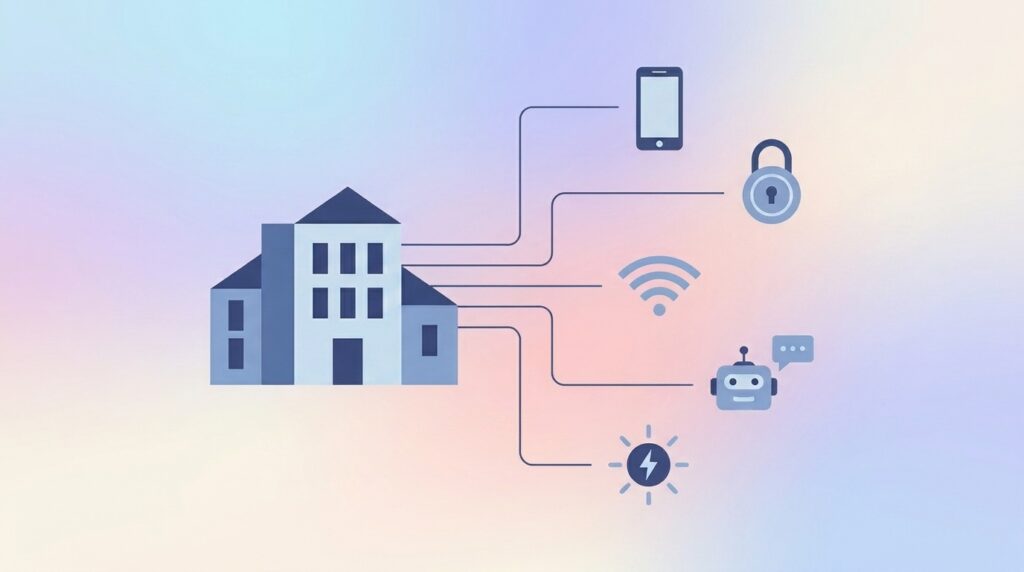

Big chains have scale and budget. But hotel technology is no longer exclusive to large brands. Today, an independent hotel can operate with the same automation, smart distribution, and digital guest experience that chains have had for years.
For years, the technology gap between hotel chains and independent properties was real and difficult to close. Systems were expensive, implementations were long, and running them required dedicated in-house teams.
That landscape has changed. The shift to cloud infrastructure, the growth of the hotel software market, and the rise of platforms built specifically for small and independent properties transformed access to technology. Today, a 20-room hotel can operate with the same level of automation, operational control, and digital experience as a 200-room property.
The challenge is no longer access. It is understanding what technologies exist, what each one does, and which ones generate real impact depending on the type of property.
The Technology Gap Is Real — But It Is Closing
Industry data makes it clear: only 42% of independent hotels operate with three or more technology solutions in place, compared to 66% of chain hotels. But the trend is reversing. Investment in hotel technology has been growing steadily among independent properties, driven by more accessible platforms, monthly subscription models, and tools that require no in-house technical support.
What changed is not only price. The approach changed too: today’s solutions are built for small teams, with fast onboarding and no steep learning curves.
The Technologies Reshaping Independent Hospitality
Property Management System: the operational foundation
A PMS brings reservations, availability, guest profiles, and reporting into one place. For an independent hotel, the most immediate impact is the elimination of manual errors and the time recovered from updating spreadsheets or managing disconnected systems. It is the starting point of any digitalized operation.
Channel manager: online distribution without overbooking
Being present on Booking.com, Expedia, Airbnb, and other OTAs simultaneously — with availability and rates always up to date — is something chains have had automated for years. A channel manager allows any property to do the same: sync all channels in real time from a single point, with no overbooking risk and no manual updates per platform.
Direct booking engine
OTAs generate visibility, but they charge commissions. A booking engine integrated into the hotel’s own website allows properties to capture reservations without intermediaries. Over time, it is one of the tools with the strongest impact on profitability: every direct booking that replaces an OTA booking improves margin without needing to increase occupancy.
Revenue management and dynamic pricing
Chains adjust rates based on demand systematically. An independent hotel working with fixed pricing leaves revenue on the table during high seasons and loses competitiveness during low periods. Yield management tools allow properties to set automated rules that adjust prices based on occupancy, booking window, day of the week, or seasonality — without monitoring the market daily. More advanced platforms incorporate artificial intelligence to suggest prices based on real-time market demand data.
Smart locks and keyless access
Smart locks allow properties to manage room access remotely, without physical keys or staff presence at check-in. The guest receives a code or accesses via their phone. For the hotel, it means less operational load, flexible check-in at any hour, and real-time visibility into which rooms are occupied. It is one of the fastest-growing technologies among independent properties over the last few years.
Self check-in and digital guest experience
Contactless check-in is no longer exclusive to boutique chains. Integrated with the PMS and smart locks, it allows guests to complete the entire process from their device before arriving: identity verification, terms acceptance, and automatic room access. For hotels with small teams or properties operating without permanent front desk coverage, it removes a significant operational burden and improves the guest experience from the first touchpoint.
Smart building: intelligent rooms
Hotel building automation — often referred to as smart building in its more integrated form — allows properties to automatically control lighting, temperature, climate systems, blinds, and energy consumption in each room. Guests can adjust the environment from their phone or through voice commands. The hotel can program automatic consumption profiles: turning off air conditioning when a room is empty, lowering blinds at sunset, preparing the right temperature before check-in.
Beyond the guest experience, the impact on operating costs is concrete. Intelligent energy management can represent meaningful reductions in utility bills, especially for properties with high turnover or located in extreme climates.
Artificial intelligence and automated guest communication
Chatbots and virtual assistants integrated into the hotel’s messaging channels can respond to frequent guest questions automatically, at any hour and in multiple languages. For an independent property without a night team, it means a guest asking at 2 a.m. about checkout time or directions from the airport gets an immediate answer. More advanced systems can also handle service requests, process upgrade offers, or trigger upselling flows automatically.
Reputation management
Chains have dedicated teams monitoring and responding to reviews across OTAs and platforms like TripAdvisor or Google. Reputation management tools centralize that monitoring, send alerts for new reviews, surface feedback trends, and allow responses from a single dashboard. For an independent hotel, maintaining an active and consistent online reputation is one of the factors with the highest impact on future guest conversion rates.
The Independent Hotel Advantage That Technology Amplifies
Chains standardize. That is their model: same experience, same brand, same process across every property. An independent hotel can do exactly the opposite: adapt each interaction, make decisions fast, and connect with guests in a way that feels genuine.
Technology does not replace that advantage. It amplifies it. A PMS that records preferences from past stays, a messaging system that enables direct contact before and during the stay, rooms that automatically adapt to guest profiles: all of that turns small scale into an asset, not a limitation.
An independent hotel that combines personalized service with a digitalized operation does not need to match a chain’s budget to compete. It needs to use the available tools well and apply them where they generate the most value for its type of property.
Where to Start
There is no need to implement everything at once. The logical order for most independent properties is:
- Start with a PMS: it is the foundation. Without centralized management, everything else is harder to scale.
- Then, channel manager and booking engine: to distribute without overbooking and start capturing direct reservations.
- Next, smart locks and self check-in: immediate operational impact, especially for properties with small teams.
- After that, dynamic pricing, smart building, and AI: once the core operation is organized, these technologies generate real impact on revenue, costs, and guest experience.
Frequently Asked Questions
Yes, although the competitive terrain is different. Independent hotels do not compete on volume or global brand recognition — they compete on experience, personalization, and local value. Technology allows them to operate with the same level of efficiency and visibility as chains in the channels that matter most, without replicating their structure.
Hotel building automation — or smart building applied to hospitality — allows properties to automate the control of lighting, temperature, climate systems, and energy consumption in each room. It improves the guest experience and reduces operating costs by managing consumption intelligently based on actual occupancy.
Generally yes. There are solutions adapted to different door types and building structures. They are especially useful for properties operating without permanent front desk coverage, vacation rentals, hostels, and boutique hotels that want to offer flexible check-in without increasing staffing.
It depends on the solutions chosen and the size of the property. PMS, channel manager, and booking engine platforms typically offer monthly subscription models that are accessible for independent properties. Smart lock and building automation solutions involve an upfront hardware cost, but prices have dropped significantly in recent years and the return in operational efficiency tends to be fast.