
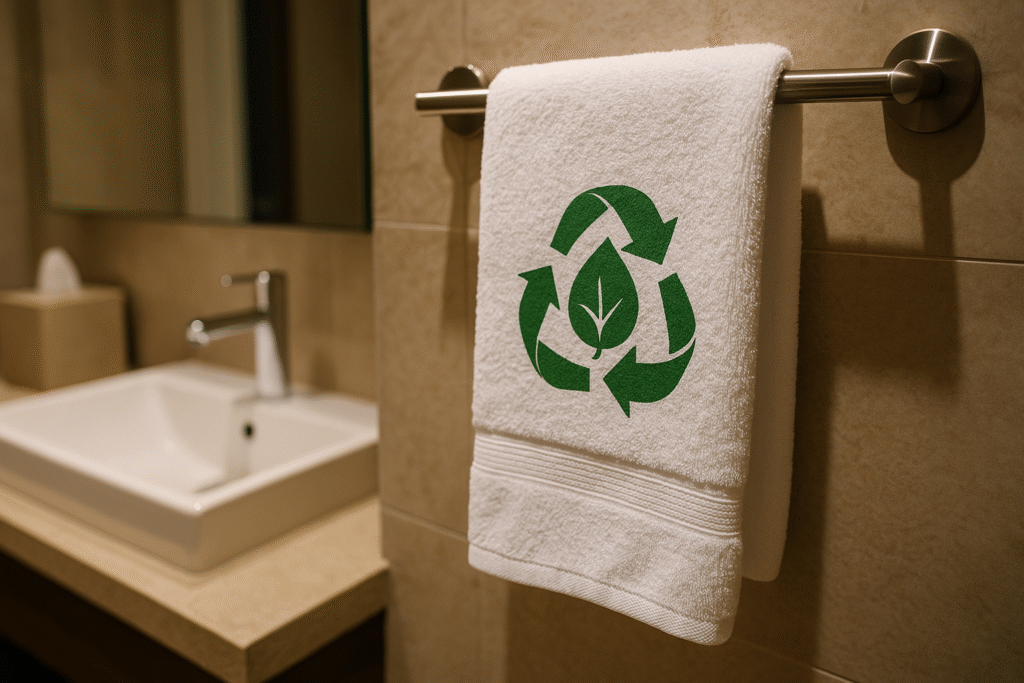


Did you know that every time you choose not to change your towel in a hotel you could be saving up to 50 liters of water? Behind that small gesture lies a powerful environmental strategy that is transforming how hotels think about their daily operations.
“Ecology is also economy.” — Sonu Shivdasani, Founder of Soneva
This principle guides Soneva’s philosophy: every sustainable action, no matter how small, contributes to a more efficient, profitable, and responsible hospitality model.
Shifting Guest Mindsets
A few years ago, asking for a clean towel every day was almost automatic. Today, traveler mindsets have changed: guests increasingly value sustainability, and hotels are adapting to that trend. The shift doesn’t just benefit the planet—it also optimizes laundry, energy, and detergent costs, significantly reducing environmental impact.
50 Liters Less with Each Decision
The Soneva group, a pioneer of sustainable luxury in Asia, has calculated that for every towel that is not laundered, approximately 50 liters of water are saved. In addition, by reducing detergent use (many of which are not biodegradable), hotels help prevent pollution of marine ecosystems. These practices show that sustainability can be integrated without sacrificing the guest experience.

Beyond Savings: A Management Philosophy
Soneva has been measuring the real impact of its operations for years through its Total Impact Assessment (TIA)—a system that values the natural, social, and human capital of every business action. The result is a complete snapshot of the environmental and economic impact of its resorts, going far beyond traditional accounting.
In 2018, Soneva recorded a net positive impact of 52 million USD, a 12% increase over the previous year. It reduced natural resource consumption by 2%, cut meat purchases by 4%, and increased the use of fresh fruits and vegetables by 11%.
Social & Human Capital: Impact Beyond the Hotel
Soneva’s environmental commitment extends beyond its properties. In Myanmar, the company distributed thousands of clean cookstoves that improve air quality and allow families to cook with less smoke and firewood. In 2018 alone, this action increased the company’s social capital value by nearly 60%, benefiting more than 37,000 people.
In parallel, Soneva’s human capital also grew: programs like Soneva Junior Host foster young talent in the industry, generating jobs and local development.
Balancing Luxury and Nature
Building a resort inevitably affects the environment, but it can be done responsibly. A clear example is Soneva Kiri on Thailand’s Koh Kood island, which offset its carbon footprint by planting half a million trees in northern Thailand—capable of absorbing more than 250,000 tons of CO₂ over 40 years.
A New Way of Thinking About Hospitality
Sustainability is no longer a decorative detail. Today, it’s part of the DNA of the most innovative hotel operations. From a towel that isn’t laundered to a forest that’s restored, every action counts. The future of hospitality won’t be measured only in stars, but also in liters of water saved and communities strengthened.